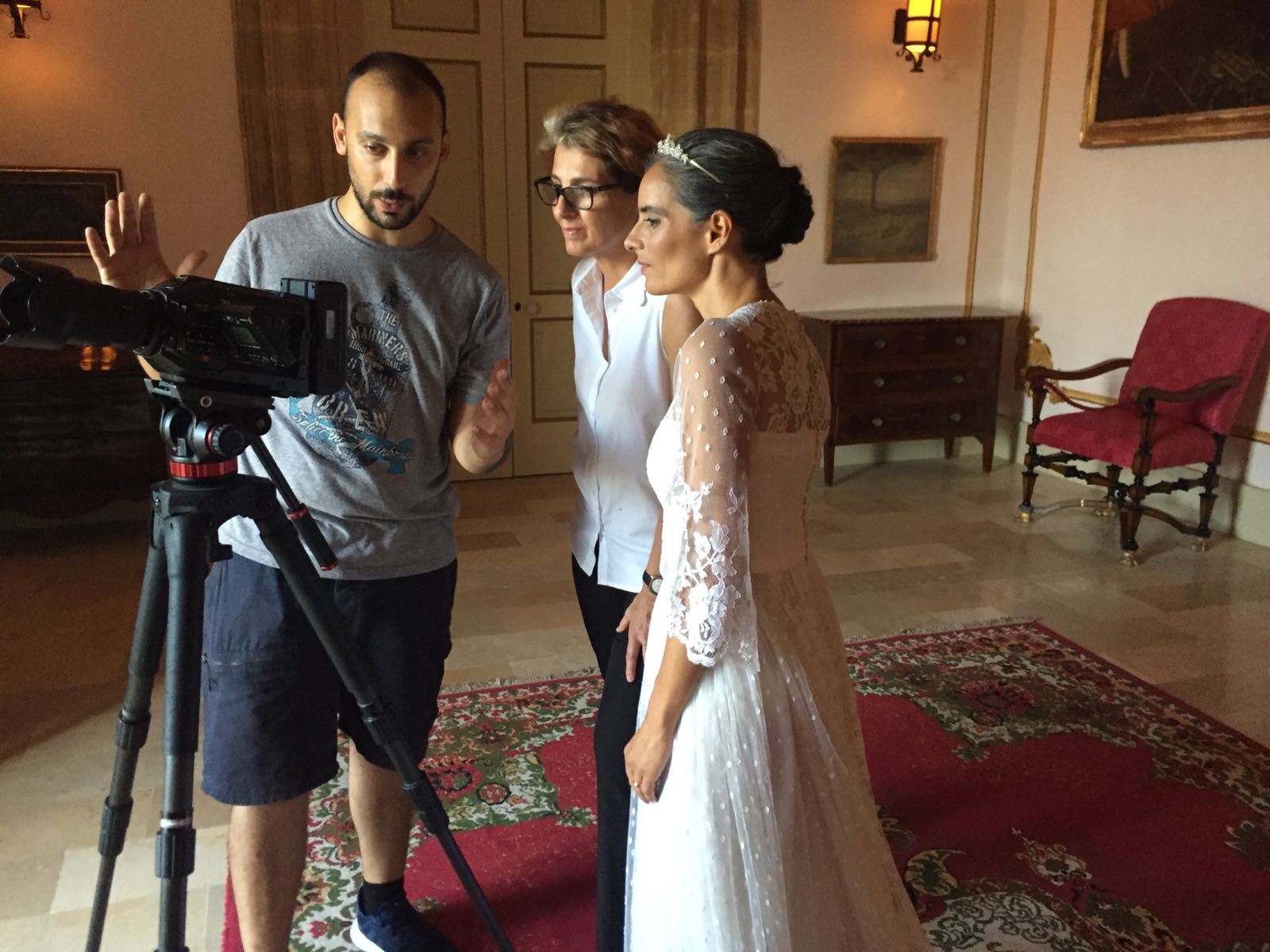
Moda l-Istorja is a culturally enriched Maltese documentary series that explores the evolution of fashion in Malta from the 18th century up to the early 20th century, designed to showcase opulent and everyday clothing evolving through different eras and social classes. The programme is scripted, produced and presented by Caroline Tonna, a first of its kind, offering a vivid narrative through visual storytelling and expert insights.
The documentary was produced by Sharp Shoot Media, supported by the funding scheme, Kultura TV, Arts Council Malta.
MALTARTI feature, Moda l-Istorja documentary
Moda l-Istorja Episode 1 – Part One – 18th Century Maltese Costume
The 13-documentary series is only available in Maltese.Journey back to the 18th century in this captivating opening episode, where the lavish textiles and opulent costumes depicted in Antoine Favray’s paintings come to life. Independent researcher Stephen Degiorgio offers fresh perspectives on Favray’s artistic vision, while collector Nicholas de Piro highlights how these works preserve the elegance of traditional Maltese dress and lace. Prof. Keith Sciberras, Head of the Department of Art and Art History at the University of Malta, reflects on the tactile beauty of drapery in the legacy of Francesco Zahra.
Moda l-Istorja Episode 1 – Part Two – 18th Century Maltese Costume
Dr Christine Muscat, an independent researcher specializing in 17th and 18th century courtesans in Malta, delves into the life of Flamina Valenti and the enforcement of sumptuary laws aimed at regulating prostitution.
Episode 2 – Part One – 19th Century Maltese Costume
Archivist Maroma Camilleri offers an insightful overview of the National Library of Malta, the Bibliotheca, and its extraordinary holdings dating back to the 12th century—including incunabula, manuscripts, legal deposits, rare books, maps, newspapers, lithographs, and drawings. She highlights an album portraying key figures of the Order of St John, showcasing attire from all levels of Maltese society—from Grand Masters and clergy to aristocratic families and rural communities. Bernadine Scicluna, curator at Heritage Malta, presents her research on German artist Charles Frederick de Brockdorff, celebrated for his watercolour paintings of Malta. She explores how his works in the National Library’s collection reflect mid-19th century costume and identity.
Episode 2 – Part Two – 19th Century Maltese Costume
Eveyly Belluci, researcher, delves into 19th-century visual ethnography. Pietro Paolo Caruana’s Costumi di Malta drawings vividly capture high society and rural dress, offering significant ethnographic value. The episode also features the work of Michele Bellanti, whose illustrations of urban and rural Maltese life during the Romantic period culminate in the Maltese Costume album of 1883, depicted by Vincenzo Fenech.
Episode 3 – Part One – Early 19th Century Dress in Malta
This episode dives into the neoclassical styles of the Empire (Napoleonic) and Regency (Jane Austen) period between the late 18th to early 19th centuries. Reenactor Nicky Bianchi of the Historical Re-enactment Group of Malta gives firsthand insights. Costume specialist, Simona Mamo, explores techniques, from fabrics and dyes to cuts and construction for the reproduction of historic costume for dance and events.
Episode 3 – Part Two – Early 19th Century Dress in Malta
Researcher, Vince Peresso examines the 1813 plague in Malta and its impact on textiles, while Prof. Vicki Ann Cremona, reveals Maltese women’s resistance to English fashions and foreign influences in dress.
Episode 4 – Part One – The Faldetta (Għonnella)
Judge Eremitus, Dr Giovanni Bonello debunks the enduring myths of Malta’s iconic faldetta (għonnella) and studies traced its origins to Sicily or Italy and historian, Mons. John Azzopardi, reveals how St Gorg Preca urged women members of the Catholic Doctrine (Tal-Mużew) to adopt the faldetta (għonnella) as everyday attire.
Episode 4 – Part Two – The Faldetta (Għonnella)
Judge Eremitus, Dr Giovanni Bonello discussed the mass protest by women members of the Catholic Doctrine (Tal-Mużew), who used the faldetta to voice fears over integration’s impact on the Catholic faith. Dr Sandro Debono, curator of Museum of Fine Arts, reflects on the faldetta as an allegorical motif in 20th century paintings.
Episode 5 – Part One
Prof. Emanuel Buttigieg explores how the Knights of Malta asserted identity through strictly regulated dress, while independent researcher, Danielle Mallia examines costume details in Antoin Favray’s depiction of Grand Master L’Isle Adam entry into Mdina.
Episode 5 – Part Two
Independent researcher, Danielle Mallia traces how Favray’s portrayal of Grand Master L’Isle Adam shaped the ceremonial dress of later Grand Masters. Music historian, Dr Anna Borg Cardona, delves into the life of instrument maker Matteo Morales through his inventory, including his clothing.
Episode 6 – Part One – Millinery Shops
The gentleman’s fashion of early 20th century is discussed with Nicholas de Piro emphasizing the importance of the hat and the collection at Casa Rocca Piccola.
Episode 6 – Part Two – Millinery Shops
Reflections on the Schembri family generational legacy at Ascot House, reveal the story of Valletta’s leading men’s fashion house. Sylvana Borg Cardona recalls her grandmother Beatrice Grech Cumbo and her millinery shop, Bice.
Episode 7 – Part One – Natural and Commercial Fabrics in Malta
Godwin Vella explores the economic framework of Malta’s cotton industry, while Louise Azzopardi of Show of Arms demonstrates the traditional process of turning sheep’s wool into thread using a spinning wheel.
Episode 7 – Part Two – Natural and Commercial Fabrics in Malta
Prof. Mark Anthony Falson explores the Indian business community in Malta and its historic fabric trade, while Victor Camilleri, director of Camilleri Paris Mode recounts his family’s five-generation legacy spanning from the late 19th century to today.
Episode 8 – Part One – Archival Documents: An Insight on Fashion Heritage
Dr Joan Abela explores archival records to trace women’s commercial activity in the 16th century within Christian-Muslim trade networks. Gabriella Radmilli examines two 18th century notaries and their clients through inventories and inheritance documents detailing clothing.
Episode 8 – Part Two – Archival Documents: An Insight on Fashion Heritage
Carmen Rossiter, a volunteer at the Notarial Archives Valletta, shares her discoveries of 19th century invoices for clothing and accessories found among a notary’s personal loose documents during archival cleaning and sorting. Isabelle Camilleri of the Notarial Archives highlights the role of dowries in documenting dress, while Claudia Garradas, Site Director for the Malta Study Centre, Hill Museum Manuscript Library, shares insights from the de Piro family archives at Casa Rocca Piccola, revealing rich evidence of luxury textiles, clothing and accessories.
Episode 9 – Part One – Tailors and Seamstresses
A rare tailor’s bill from 1715, discovered by Nicholas de Piro in his family archive, reveals detailed records of historic garments, while Grace Gauci, volunteer at the Notarial Archives unearthed an ink doodle of an 18th century man’s coat hidden within a notarial document. Meanwhile, John Vella of a long-established Mosta haberdashery traces the origins of his family’s sewing machines business, and Dr Lorraine Portelli explores the formal teaching of needlework through the years.
Episode 9 – Part Two – Tailors and Seamstresses
Prof Chris Grech, researcher and collector of military and civil uniforms, explains the distinction between court uniform and court dress.
Episode 10 – Part One – Historic Jewellery
Francesca Balzan, a researcher specializing in historic jewellery as a marker of investment and social status, reflects on refined jewellery as part of a woman’s fashion in Malta.
Episode 10 – Part Two – Historic Jewellery
Francesca Balzan selects rare jewellery pieces from Palazzo Falson collection, while jeweller Ray Grech, demonstrates the creation of a ganutell necklace using solid gold grains. Researcher Dr Raina Zarb Adami, explores how filigree jewellery became embraced across every social stratum.
Episode 11 – Part One – History of Photography in Malta
Kevin Casha, a researcher specializing in the history of photography in Malta, selects some works from early photographers and reflects on their significance.
Episode 11 – Part Two – History of Photography in Malta
Paul Vella, an avid collector and restorer of photographic cameras, offers insight into the development of cameras throughout the 19th and 20th centuries, while Jane Bonnici Buhagiar shares memories of her mother, Carmela Meilaq, one of the first Gozitan photographers.
Episode 12 – Part One – The Legacy of Maltese Lace
Annamaria Gatt, researcher, lacemaker, educator and collector, studies the design and development of lace in Malta both used for ecclesiastical garments and secular clothing and accessories. Marthese Deguara, Ursola Gauci and Alberta Debattista, lacemakers share their hobby of lacemaking and learning skills acquired through formal training.
Episode 12 – Part Two – The Legacy of Maltese Lace
Dr Consiglia Azzopardi, a dedicated educator and advocate of lacemaking, shares her research on early lace designers, patterns and techniques. Meanwhile, anthropologist Dr Rachel Radmilli, explores Maltese lace as a rich form of intangible cultural heritage passed down through generations.
Episode 13 – Part One – Wedding Gowns by Madame Manfre and the Haro Shop Story
Dr Christina Meli offers her insights on an 18th century painting depicting a Maltese wedding on a church parvis, with particular attention to the bride’s gown. Renowned couturier Madame Manfre is fondly remembered by client, Frances de Piro, who recounts her experience in Manfre’s atelier. Music researcher, Dr Anna Borg Cardona, explores the National Country Dance, including a gown Madame Manfre recreated for this dance later known as Il-Maltija.
Episode 13 – Part Two – Wedding Gowns by Madame Manfre and the Haro Shop Story
Textile conservator Claire Bonavia, demonstrates how costume is conserved and stored on custom-made mounts, highlighting the restoration of a dress by Madame Manfre. Pat Salomone presents her research on the Haro legacy and shares a recording of her interview with Robert Eder, one of the shop owners.